 CSoNet 2026
Learning on Graphs in Changing Environments: From Topology to Physical Dynamics
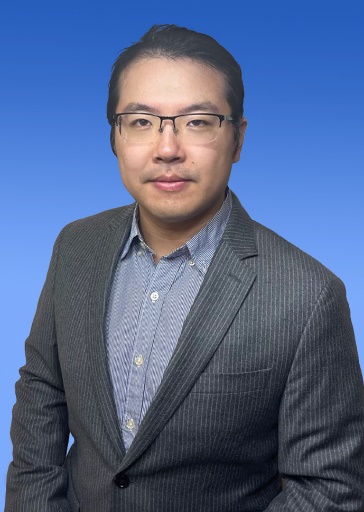
Dr. Yi He
Department of Data Science at William & Mary.
Abstract. Modeling evolving processes on networks is essential to applications such as traffic forecasting and hydrologic prediction. Although graph neural networks (GNNs) provide a flexible framework for capturing spatial dependencies, they can struggle when predictions are governed by directional flows and physical interactions that extend beyond the observed graph. In particular, conventional message passing may suppress direction-sensitive information, unobserved forcing at network boundaries can introduce substantial prediction errors, and these errors can accumulate during long-horizon forecasting.
This talk presents our recent research on topology-aware and physics-guided graph learning to address these challenges. We first explore how directional difference operators and physical constraints can help GNNs capture flow dynamics that conventional graph aggregation tends to overlook. We then examine how unobserved external forcing affects prediction accuracy at network boundaries and discuss boundary-consistent learning methods that infer these missing influences. Building on these insights, we investigate physics-refined spatiotemporal forecasting for open-boundary hydrologic systems, with an emphasis on reducing error accumulation over time. Through examples from water-flow and traffic networks, these studies demonstrate the benefits of incorporating physical knowledge into graph learning.
Biography. Yi He is an Assistant Professor in the Department of Data Science at William & Mary, within the School of Computing, Data Sciences, and Physics. Prior to joining William & Mary, he was an Assistant Professor in the Department of Computer Science at Old Dominion University from 2021 to 2024. He received his Ph.D. from the Center for Advanced Computer Studies at the University of Louisiana at Lafayette in 2020, under the supervision of Prof. Xindong Wu, and his B.E. from Harbin Institute of Technology in 2013. His research focuses on learning from evolving and networked data, with interests spanning data mining, streaming algorithms, graph learning, and AI applications in environmental and conservation sciences. He is a recipient of the NSF CAREER Award (2026), NSF CRII Award (2023), and IEEE TCII Volunteer Award (2022). He is a Senior Member of the IEEE.