 CSoNet 2026
World Models for Robust Autonomous Driving in Mixed Traffic

Dr. Cheng-Zhong Xu
University of Macau, Macao SAR, China
Abstract. Autonomous driving is transitioning into a mature phase focused on robustness, leveraging cognitive edge AI technologies. This talk will first discuss the challenges for robust autonomous driving in mixed traffic where self-driving and human driving vehicles co-exist. It will then introduce University of Macau's MoCAD project, which develops core enabling technologies for robust autonomous driving in open and complex environments. Topics of generated AI for creating robust scenarios and world models for end-to-end driving simulation will be presented. Occupant emotional states and surrounding traffic behavior will also be discussed, as self-driving vehicles become moving robots on the road.
Biography. Dr. Cheng-Zhong Xu is a Chair Professor of Computer Science, the Dean of the Faculty of Information System and Computing, and the Director of Institute of AI and Brain Science, University of Macau. He served as Chief Scientist for key national projects on "Internet of Things for Smart City" (Ministry of Science and Technology of China) and "Intelligent Driving" (Macau SAR, China). He was also Director of Institute of Advanced Computing and Digital Engineering at the Shenzhen Institutes of Advanced Technology (SIAT), Chinese Academy of Sciences. Before these roles, he spent over 18 years as a faculty member at Wayne State University, USA. Dr. Xu's research focuses on parallel and distributed systems, cloud computing, intelligent driving and smart city applications. He has published over 600 papers and held more than 150 patents. His work has garnered over 27000 citations and has been cited in 340+ international patents, including 240 U.S. patents. Dr. Xu chaired IEEE Technical Committee of Distributed Processing from 2014 to 2020. He earned his B.S. and M.S. in Computer Science from Nanjing University and his Ph.D. from the University of Hong Kong in 1993. He is an IEEE Fellow, due to contributions in resource management in parallel and distributed systems.
Toward Efficient Large Language Models for Real-World AI
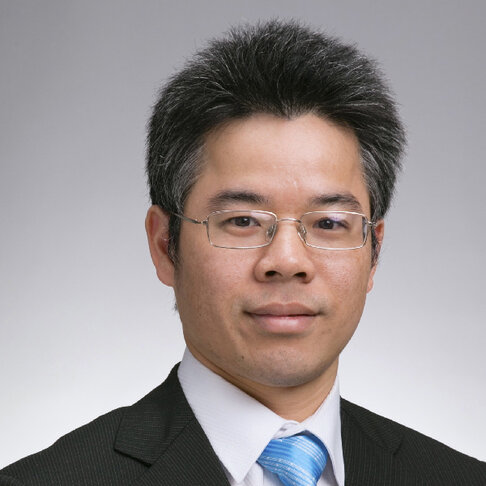
Prof. Nguyen Le Minh
School of Information Science, Japan Advanced Institute of Science and Technology (JAIST), Japan
Abstract. Large Language Models are transforming the way we interact with information, knowledge, and intelligent systems. Yet their full potential cannot be realized unless they become more efficient, practical, and widely deployable. Making LLMs faster, lighter, and more scalable is not just a technical goal—it is a necessary step toward bringing advanced AI to more people, devices, and domains. In this talk, I will share a broad perspective on the growing field of efficient LLMs, highlighting emerging ideas for accelerating inference and reducing model complexity without sacrificing capability. By looking beyond raw model size and toward practical deployment, we can begin to build AI systems that are both powerful and usable at scale. The talk will explore why efficiency matters, where the field is heading, and how this line of research can help shape the next generation of real-world AI.
Biography. Nguyen Le Minh is currently a full Professor of the School of Information Science, JAIST. He was the director of the Interpretable AI Center at JAIST from 2020 to 2024. He leads the Machine Learning and Natural Language Understanding Laboratory at JAIST. He takes a sabbatical at Imperial College London, UK (from April 2025 to March 2026). His research interests include machine learning & deep learning, natural language processing, legal text processing, and explainable AI. He serves as an action editor of TACL (a leading journal in NLP), a board member of VLSP (Vietnamese language and speech processing), and an editorial board member of AI & Law, Journal of Natural Language Processing (Cambridge). He is a member of the steering committee of Juris-informatics (Jurisin) in Japan, a research area that studies legal issues from informatics.